Chinese
  English
  Japanese
  Spanish
  Portuguese
  German
Understanding CWDM and DWDM: Differences, Applications, and Future Potential
In modern optical communications, CWDM (Coarse Wavelength Division Multiplexing) 和 DWDM (Dense Wavelength Division Multiplexing) are two critical technologies enabling the efficient transmission of multiple signals over a single optical fiber. While they serve a similar purpose, multiplexing different data streams on distinct wavelengths, they differ in design, capacity, application, and cost. Here’s a breakdown of their differences, advantages, and potential future applications.
CWDM
CWDM typically operates over the full optical spectrum but is often limited to the 1270–1610 nm range, excluding the amplification window. It uses wider wavelength spacing of 20 nanometers apart, allowing up to 18 channels on a single fiber. It is designed for short- to medium-range applications (up to ~80 km) due to its lower signal amplification and simpler design. CWDM is less expensive due to simpler components and no need for cooling or amplification in most cases.
On top of its low-cost component, it also does not require much cooling which results in lesser energy consumption. The simpler hardware makes installation and maintenance straightforward for easier deployment.
CWDM is mainly deployed in metro networks linking offices, data centers, and other infrastructure over shorter distances. It is also popular among small-to-medium enterprises for connecting local or in campuses with moderate capacity requirements.
DWDM

DWDM is a critical solution for long-haul telecommunication networks as it is usually deployed as the backbone network spanning cities, countries, and across countries. High capacity and low latency DWDM links are crucial for hyperscale data center interconnects and supports bandwidth-intensive operations of cloud services. In addition, it is also used for 5G backhaul to connect base stations to core networks.
Future Applications and Trends
As demand for bandwidth continues to skyrocket, both CWDM and DWDM will play vital roles in shaping the future of optical networking. Applications that require high bandwidth or long-distance transmission will highly depend on DWDM solutions while CWDM is most likely to be deployed in city-wide connectivity.
Massive data exchange between AI training facilities and edge devices will require DWDM’s high-capacity infrastructure. In wireless networks such as 5G and beyond, DWDM supports the backbone of 5G networks, while CWDM can be used to support urban deployments where there may be more fiber links within a smaller area. CWDM will likely power local networks for IoT devices in smart city applications, while DWDM will handle inter-city communication.
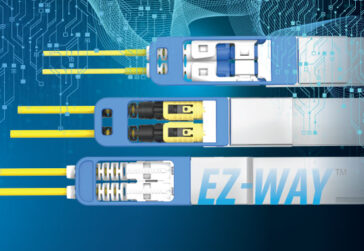
SENKO offers a comprehensive range of CWDM and DWDM solutions designed to support the evolving needs of future network deployments. These advanced solutions enable efficient bandwidth utilization by allowing multiple data streams to be transmitted simultaneously over a single fiber, reducing infrastructure costs while increasing network capacity. SENKO’s products are engineered to deliver high reliability, low insertion loss, and seamless scalability, making them ideal for applications in telecommunications, data centers, and next-generation optical networks. By providing cutting-edge CWDM and DWDM solutions, SENKO empowers businesses to build flexible, future-ready networks that can adapt to growing demands for speed, efficiency, and connectivity.
结语
CWDM and DWDM are complementary technologies tailored to different networking needs. CWDM shines in short-range, cost-sensitive applications, while DWDM dominates in high-capacity, long-haul communications. As the digital world continues to expand with advancements like 5G, AI, and IoT, both technologies will remain integral to meeting the world’s growing connectivity demands, each in its specialized niche.

数据中心