German
  English
  Japanese
  Chinese
  Spanish
  Portuguese
ECOC 2026: From Faster Optics to Smarter Architectures
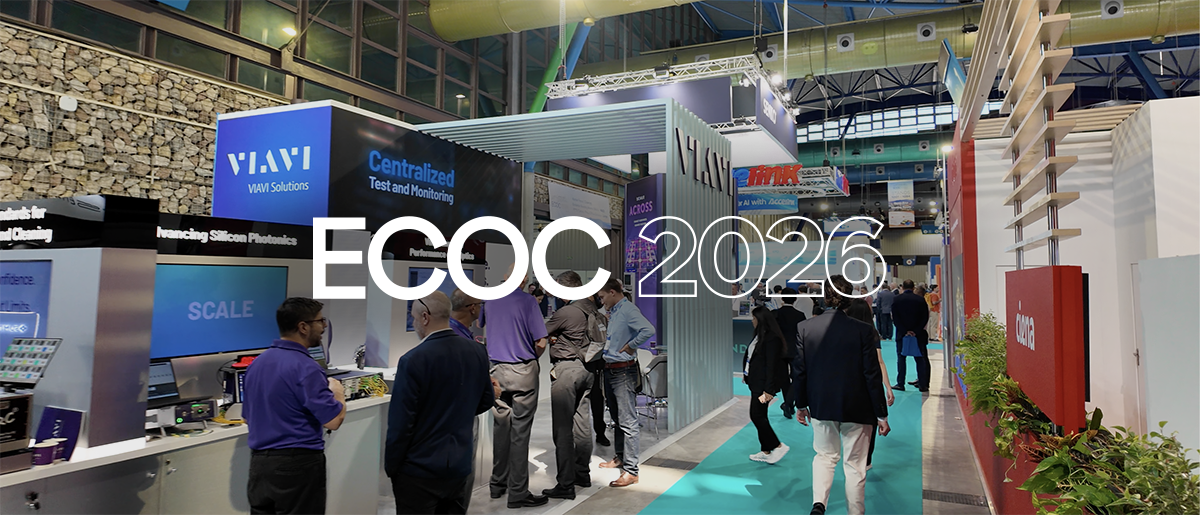 A post-show perspective on the technologies shaping scalable AI infrastructure
SENKO Advanced Components | September 2026
Optical connectivity is becoming a system decision
One week after ECOC 2026, the industry’s direction is becoming clear: scaling AI infrastructure is no longer just about increasing bandwidth. It is about delivering more connectivity, lower power consumption, greater serviceability, and architectures that can realistically be manufactured at hyperscale.
The exhibition showed an industry moving from isolated component improvements toward coordinated decisions across optical architecture, photonic integration, fibre connectivity, production testing, and lifecycle management.
Our perspective is that the technologies that scale successfully will combine performance with practical manufacturing, deployment, and serviceability.
What matters beyond headline bandwidth
- Speed is only one part of the requirement. The transition from 800G to 1.6T and eventually 3.2T must also improve bandwidth density and power efficiency.
- Architecture determines the connectivity challenge. Pluggable, near-packaged, and co-packaged optics create different requirements for electrical reach, cooling, test access, and replacement.
- Integration affects the complete signal chain. Light generation, beam shaping, detection, processing, and fibre attachment increasingly need to be considered as one system.
- Production readiness will shape adoption. Manufacturability, testability, interoperability, and serviceability will influence which approaches move beyond demonstrations.
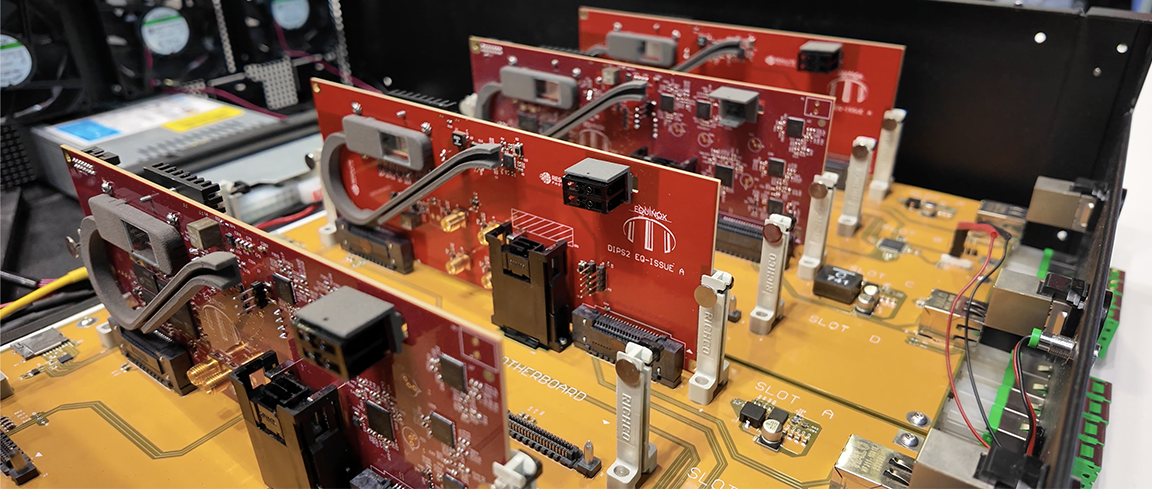
Higher speeds and changing optical architectures
The roadmap extends beyond faster modules
The most visible trend at ECOC was the industry’s race toward higher-speed optical links. Demonstrations and announcements highlighted the move from 800G to 1.6T and, eventually, 3.2T connectivity, reflecting the growing requirements of AI scale-up and scale-out networks. Advances in 200G and 400G-per-lane technology also pointed toward greater bandwidth density and lower power consumption per bit.
As AI clusters expand, optical interconnects are becoming a critical part of the infrastructure equation. The challenge is no longer simply transmitting more data. It is doing so efficiently enough to support increasingly power-constrained environments.
Compare architectures through the operating model
One of the strongest themes throughout ECOC was the discussion around near-packaged optics (NPO) and co-packaged optics (CPO). While traditional pluggable transceivers remain essential, industry attention is increasingly focused on architectures that shorten electrical paths and improve system efficiency.
NPO emerged as a practical bridge, offering power advantages while retaining physical separation between the optical engine and switch ASIC. That separation can help preserve testability and rework options. CPO remains a longer-term endpoint for reducing insertion loss and power, although mass-production, interoperability, and operating-model questions remain.
The growing attention around initiatives such as the Open CPX MSA also reflects demand for open ecosystems and multi-vendor interoperability as these architectures mature.
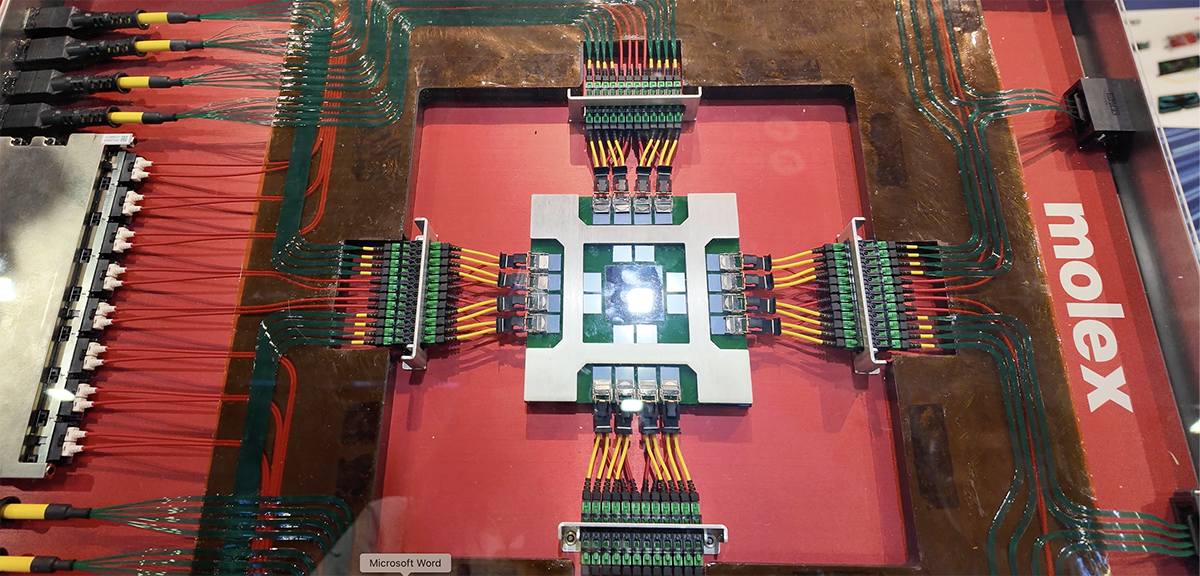 Photonic integration is becoming a competitive advantage
The complete optical signal chain matters
Beyond speed and architecture, ECOC 2026 highlighted a broader movement toward deeper photonic integration.
Companies presented approaches that bring light generation, beam shaping, detection, and signal processing into more integrated platforms. Developments in optical engines, silicon photonics, laser integration, and photonics-electronics convergence suggest that the industry is increasingly optimizing the complete optical signal chain rather than treating each component in isolation.
Future AI infrastructure performance will depend not only on faster optics, but also on how effectively those optics integrate with switches, processors, and system-level architectures.
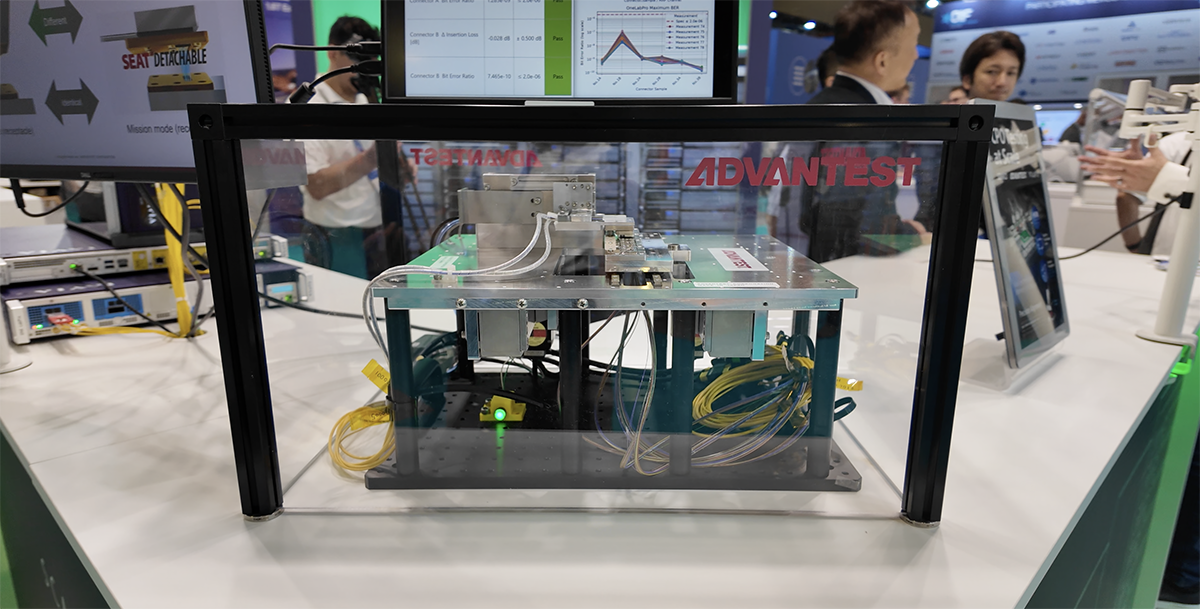 Testing and serviceability shape the path to scale
Manufacturing readiness matters more than ever
Perhaps the most important takeaway from ECOC 2026 is that the discussion has moved beyond laboratory performance alone.
As optical demand accelerates, the ecosystem is placing greater emphasis on manufacturability, testing, deployment, and lifecycle management. Conversations around NPO, CPO, and photonic integration repeatedly returned to scalability, repairability, interoperability, and production readiness.
The technologies that succeed will need to combine performance with the ability to be manufactured, tested, deployed, and maintained at the scale required by AI infrastructure.
 SENKO perspective and next steps
Looking ahead
ECOC 2026 showed an optical networking industry entering a new phase. AI demand is accelerating work on higher-speed interconnects, integrated photonics, open architectures, and next-generation packaging. At the same time, optical circuit switching, photonics-electronics convergence, and quantum-secure networking are moving closer to practical deployment discussions.
The shared objective is clear: enable AI infrastructure to scale further, use power more effectively, and operate with greater efficiency across the full lifecycle.
Four questions to take into the next design review
- What optical architecture best fits the required performance and service model?
- How will the optical interface be assembled, tested, and accessed?
- Which elements can be inspected, cleaned, reworked, or replaced?
- What evidence demonstrates readiness for repeatable volume manufacturing?

Datenzentrum