English
  Japanese
  Chinese
  Spanish
  Portuguese
  German
CIOE 2026
Screenshot
Connecting the Next Generation of AI Infrastructure
SENKO Advanced Components | September 2026
Optical connectivity is becoming a system decision
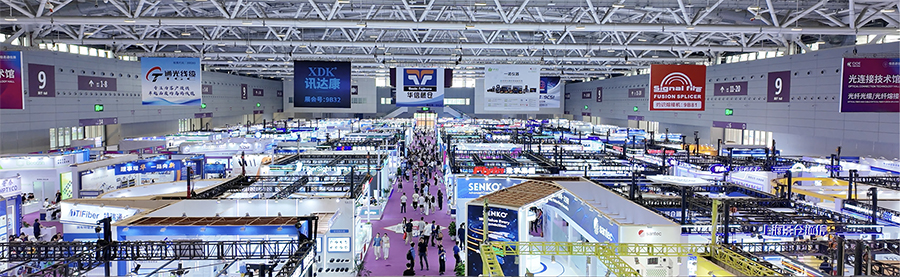
CIOE 2026 highlighted a broader challenge for AI infrastructure: delivering higher bandwidth requires coordinated progress in optical devices, packaging, fibre connectivity and production testing. The organiser’s coverage placed high-speed interconnects and advanced optical integration among the event’s central communications themes.
For SENKO, the significance lies in how these technologies connect. As optical engines move closer to switching and compute silicon, their interfaces become part of the package, manufacturing process and service model. At the same time, the surrounding fibre network must remain manageable as connection density increases.
Our perspective is that the next generation of AI infrastructure requires optical connections that enable higher performance, repeatable manufacturing and practical servicing at scale. CIOE provided a valuable view of the technologies being developed to meet that challenge.
What matters beyond headline bandwidth
Architecture determines the connectivity requirement. Pluggable, near-packaged and co-packaged optics create different constraints on optical access, routing, cooling and replacement.
The fibre interface belongs in the initial design. Coupling method, alignment, loss and mechanical access influence how an optical engine can be assembled and tested.
Manufacturing needs repeatable connections. Test results must reflect the device under test, with connection variation controlled throughout the process.
Density must remain operationally useful. Compact interfaces need a practical approach to polarity, inspection, cleaning and cable management.
A perspective from the show floor
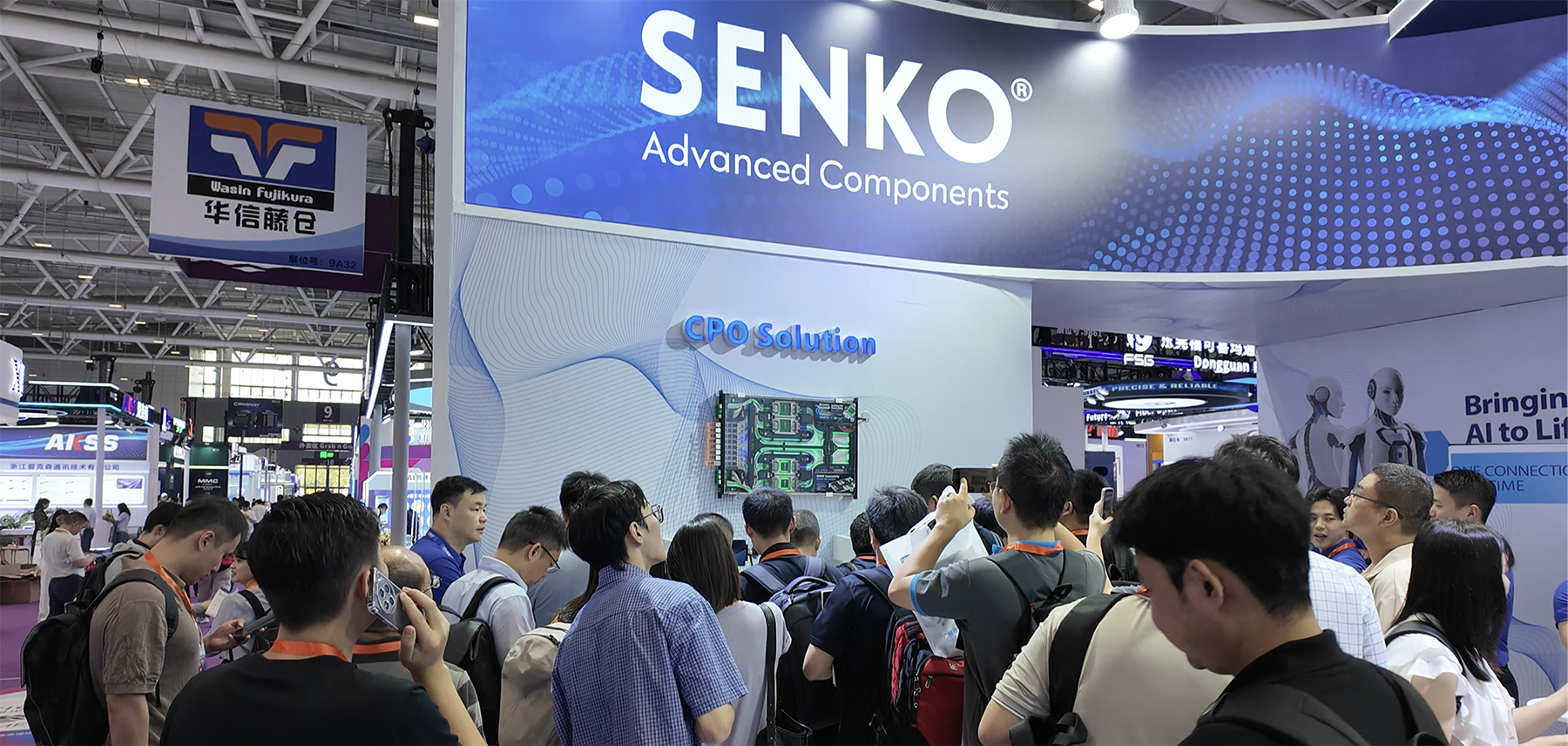
SENKO participated at CIOE alongside our China team, engaging with customers and ecosystem partners. This report combines that participation with selected public technology announcements to examine what the industry’s direction means for optical connectivity. It focuses on design and deployment implications rather than market-size forecasts.
Higher speeds and changing optical architectures
The roadmap extends beyond faster modules
CIOE’s technology roundup reported a 1.6T OSFP module from Cambridge Industries Group and Accelink’s single-wavelength 400G work for 3.2T pluggable validation. These examples illustrate progress at both module and component level; their commercial readiness needs to be assessed individually.
The organiser also highlighted GlobalFoundries’ silicon photonics platform across pluggable, near-packaged and co-packaged applications, and a 6.4T near-packaged optical engine from HG Genuine. Silicon photonics is therefore relevant to several integration routes, each with different system requirements
Compare architectures through the operating model
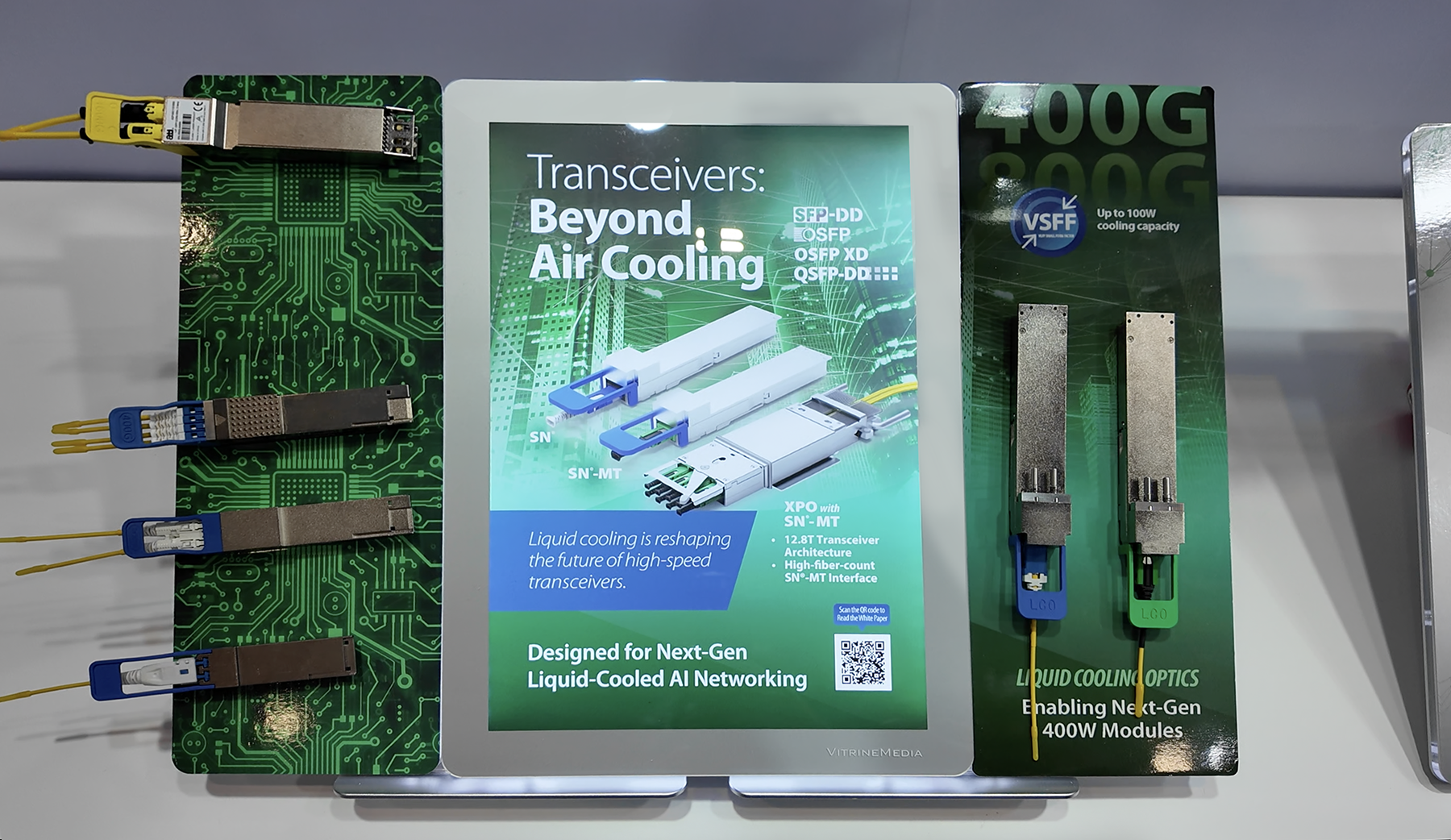
Moving optical engines closer to the main chip can shorten the electrical path. The potential benefits must be assessed alongside package complexity, cooling, test access and repair. The comparison below summarises SENKO’s design perspective; terminology and implementation vary between suppliers.
| Approach | Design opportunity | Questions to resolve |
| Pluggable optics | Modular optical interfaces with accessible replacement. | Faceplate density, electrical reach, cooling and module power. |
| Near-packaged optics | Optical engines positioned close to the main processor or switch. | Engine placement, fibre routing, electrical interfaces and replacement access. |
| Co-packaged optics | Optical engines integrated with the main chip at package level. | Package yield, optical test access, thermal design and repair strategy. |
What customers should establish
Before comparing advertised speeds, confirm whether a figure describes a lane, wavelength, module or aggregate optical engine. Then compare reach, power, operating temperature and qualification status on the same basis. A successful component demonstration is one stage on the path to a production-qualified system.
SENKO’s view is that multiple architectures will need connectivity solutions suited to their physical and operational constraints. The useful question is how each design will be built, tested, installed and maintained.
Connecting the photonic engine to the fibre network
Fibre attachment is part of photonic integration
A photonic integrated circuit (PIC) needs a controlled optical path to the fibre. Coupling geometry, alignment tolerance and mechanical stability affect how that interface performs. The assembly must preserve the required alignment through manufacturing and operation, while accommodating its thermal and mechanical environment.
SENKO’s Metallic PIC Connector (MPC) platform supports edge and surface coupling in permanent and detachable configurations. SEAT technology provides a detachable interface intended to support assembly, testing and PIC replacement. These are examples of how we address the interface between photonic integration and manufacturing.
Detachability creates options that need qualification
A detachable interface can allow fibre attachment and removal at defined points in assembly or test. Its usefulness depends on whether reconnection remains consistent within the optical loss budget, and whether the connection is accessible in the intended system.
For this reason, we encourage teams to define reconnection repeatability, mating-cycle requirements, contamination controls and inspection access early. Detachability at a component interface does not automatically make an entire co-packaged system field-replaceable; that depends on the wider design.
Density extends from the package to the patch panel
The fibre path continues beyond the optical engine through board-level routing, equipment interfaces and structured cabling. Space saved at one interface must be evaluated alongside bend-radius requirements, cable congestion, airflow and the room needed to connect or disconnect the assembly.
SENKO’s SN-MT family addresses high-density multifibre connectivity with a very small form factor interface. Its applications include compact patch panels and connections supporting high-speed optical infrastructure. It complements fibre-to-chip work by addressing density elsewhere in the optical path.
The SENKO design priority
We recommend evaluating the complete fibre path as one system. Specify the loss budget across interfaces, define polarity and labelling, and establish how each accessible connection will be inspected and cleaned. These practical requirements help translate high connection density into infrastructure that customers can deploy and support.
Testing and supply readiness shape the path to scale
Repeatability matters as much as the measurement
A production test process must connect to the device reliably, measure its performance and move to the next unit. Variability in optical contact, alignment or cleanliness can complicate the interpretation of results. Connection design and test handling therefore need to be developed together.
From SENKO’s perspective, the goal is a stable measurement interface within a workable manufacturing flow. Teams should establish acceptable connection variation, calibration procedures, cleaning intervals and how to distinguish a device fault from a connection problem.
Testing at the right manufacturing stages
Screening earlier in assembly can help avoid adding further value to defective parts. Later testing checks the completed assembly and the effects of packaging. The balance depends on access, test coverage, cycle time and the cost of a defect escaping to the next stage.
We encourage customers to assess the test sequence across the product lifecycle rather than treating optical connection as a final fixture decision. Throughput targets should include handling, connection, measurement and any cleaning or retest time.
A practical collaboration beyond CIOE
On 14 September, following CIOE, SENKO announced a collaboration with Advantest and VIAVI Solutions focused on high-volume CPO module testing. It combines SENKO’s detachable optical connectivity and SAM-T HVM test connector with automated test handling and photonic measurement capabilities.
The planned ECOC technology simulation illustrates the direction of this work: integrating optical connection and measurement into an automated environment. Visitors can explore the concept at SENKO booth 1005. This subsequent activity extends the manufacturing discussion beyond the CIOE event.
The surrounding supply chain remains essential
CIOE’s technology roundup also included indium phosphide substrates, photodetectors and external laser sources. These developments underline the breadth of the component ecosystem supporting advanced optics.
For customers, announcements of new materials or devices are a starting point for qualification. Usable output, consistency, reliability and integration readiness are the evidence needed to turn a technology roadmap into a delivery plan. Our assessment is that scalable deployment depends on these supporting capabilities progressing together.
Screenshot
SENKO perspective and next steps
Collaboration across the ecosystem
At CIOE, SENKO’s Global Marketing and China teams supported interviews involving GlobalFoundries, Molex, Tencent, TE and CommScope, alongside an interview with Kazu Takano on the SENKO stand. This engagement connected perspectives from across the ecosystem and strengthened collaboration between our local and global teams.
For SENKO, We Value Every Connection applies to both the optical interfaces we develop and the relationships needed to make them work within complete systems. Our role is to help customers resolve connectivity requirements early, in collaboration with their photonics, packaging and test partners.
Five questions to take into the next design review
- What optical architecture best fits the required performance and service model?
- How will fibre be attached, routed and accessed within the available space?
- How will connection repeatability be controlled during manufacturing and test?
- Which elements can be inspected, cleaned, reworked or replaced?
- What evidence demonstrates readiness of the complete qualified assembly?
The opportunity highlighted by CIOE is to connect optical innovation with practical delivery. SENKO’s focus is on the interfaces that help customers make that transition, from the photonic engine to the wider fibre network.
Explore SENKO optical connectivity solutions
Sources and scope
Published by SENKO Advanced Components, 16 September 2026. Event examples are attributed to public organiser and company material. Participation details are based on SENKO’s account. Technical interpretations and design priorities represent SENKO’s perspective; cited announcements are not independent performance validation.
CIOE organiser sources are in Chinese. Company mentions do not imply endorsement of this report.

Data Center