English
  Japanese
  Chinese
  Spanish
  Portuguese
  German
From 400G to 1.6T: The Infrastructure Challenge Behind Next-Generation Networks
The transition from 400G to 800G and ultimately 1.6T networking represents one of the most significant shifts the data center industry has experienced in recent years. Driven by AI workloads, high-performance computing, cloud expansion, and ever-increasing data demands, network operators are under pressure to deliver more bandwidth while maintaining efficiency, scalability, and reliability.
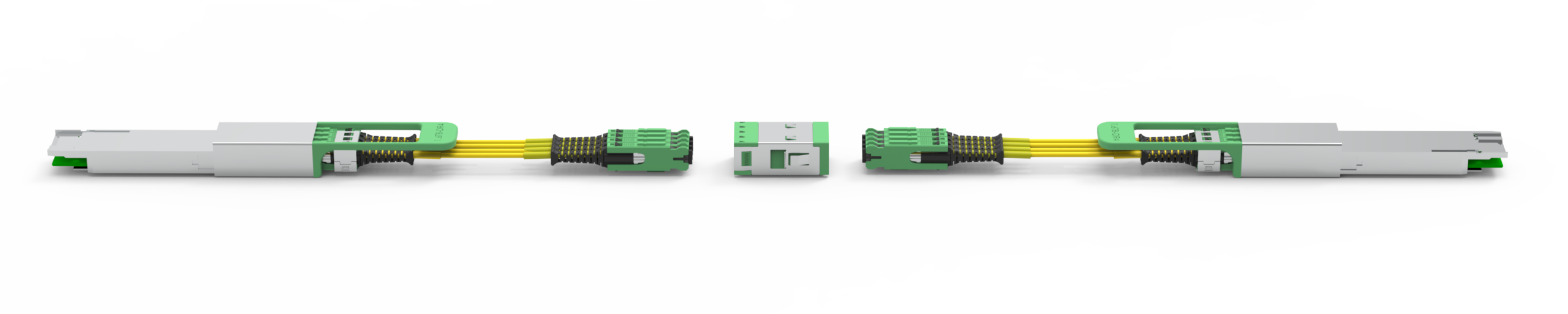
While much of the industry discussion focuses on optics and switch technology, the reality is that the migration to higher speeds creates infrastructure challenges that extend throughout the physical layer. As networks evolve, organizations must rethink how they manage fiber density, cable routing, breakout architectures, polarity, and long-term scalability.
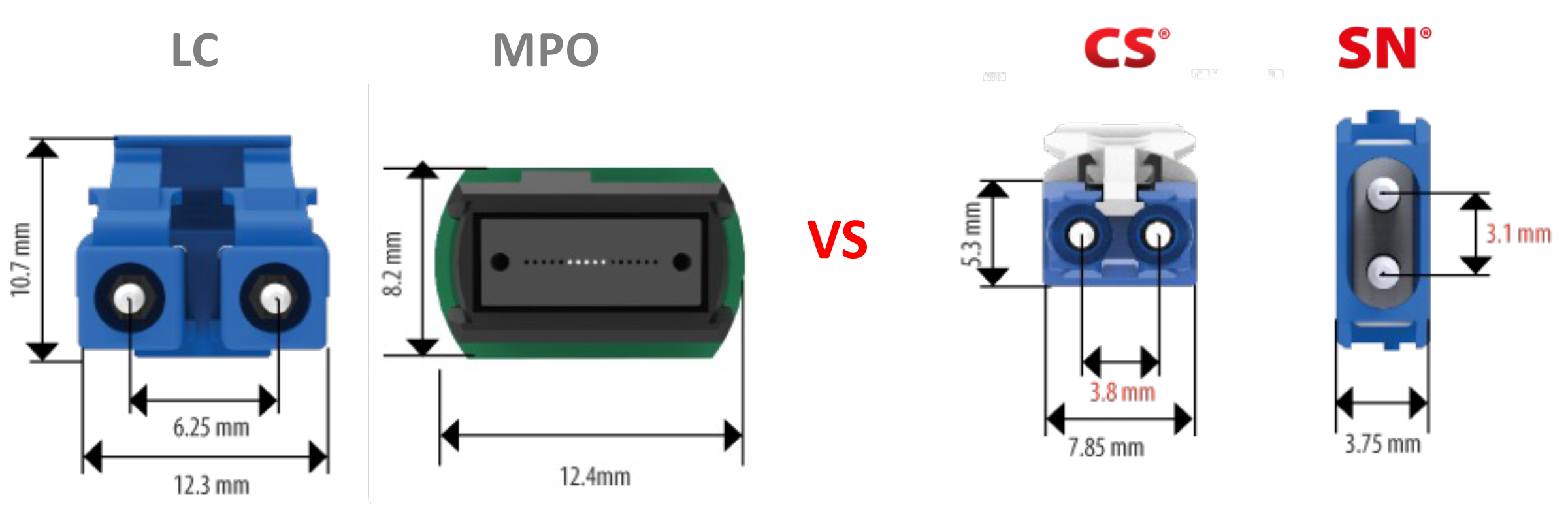
One of the most immediate challenges is density. Higher-speed networks require greater fiber concentration within the same rack footprint. Data center operators are being asked to support more connections, more bandwidth, and more flexibility without increasing the amount of physical space available. Traditional approaches that worked effectively in earlier generations can quickly become difficult to manage as fiber counts grow and network architectures become more complex.
Breakout connectivity adds another layer of complexity. Many next-generation architectures rely on the ability to split high-speed links into multiple lower-speed connections. While this approach can improve flexibility and optimize equipment utilization, it also introduces new considerations around cabling design, polarity management, and future migration paths. Without careful planning, what begins as a straightforward upgrade can become increasingly difficult to scale and maintain over time.
AI infrastructure is further accelerating these challenges. Large-scale AI clusters require enormous volumes of east-west traffic, placing greater demands on network fabrics than traditional enterprise environments. As organizations build AI-ready infrastructure, connectivity solutions must support not only higher bandwidths but also operational simplicity and efficient fiber management.

Future-proofing has become another important consideration. Decisions made today will influence how easily networks can adapt to emerging technologies and higher-speed standards tomorrow. Infrastructure designed with flexibility in mind can help organizations reduce disruption, simplify upgrades, and maximize the value of their investments over the long term.
The move to 1.6T is not simply about achieving faster speeds. It is about building a connectivity foundation capable of supporting the next generation of applications, architectures, and workloads. Organizations that take a strategic approach to density, scalability, and infrastructure design today will be better positioned to navigate the challenges and opportunities of tomorrow’s networks.

Data Center